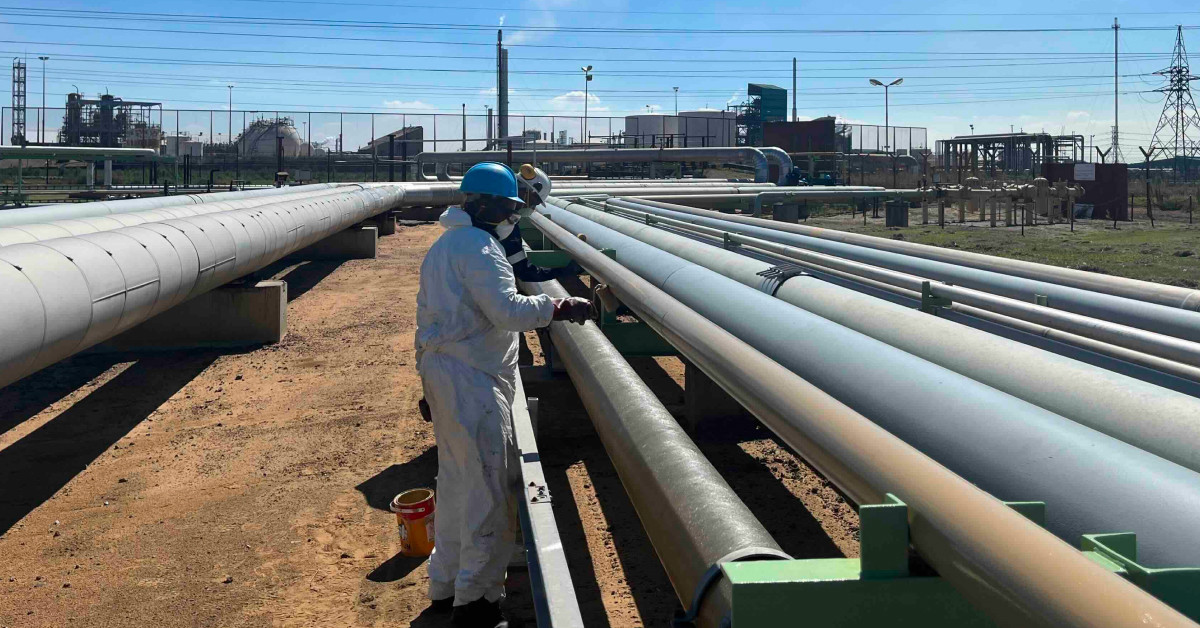
Industrial facilities, construction projects, and infrastructure are subject to harsh conditions that can lead to one of the most damaging and costly issues: corrosion. Whether in manufacturing facilities, logistics warehouses, established mining operations or large scale construction projects, corrosion compromises the structural integrity of equipment and buildings, leading to costly repairs, safety hazards, and operational downtime.
That’s where Industrial Painting Services come into play. By applying protective coatings, companies like Industrial Painting Services help prevent corrosion, ensuring the durability and longevity of critical assets. In this article we explore the different types of corrosion and how industrial coatings play a crucial role in extending the lifespan of industrial structures and mission critical equipment.
Types of Corrosion and Their Impact on Industrial Assets
Corrosion occurs when metals, such as steel, iron, or aluminium, react with environmental elements like water, air, and chemicals. There are several forms of corrosion, each with unique characteristics and potential damage to industrial systems:
Uniform Corrosion
This is the most common type of corrosion, where the entire surface of a metal object gradually wears away due to contact with moisture or chemicals. While it may seem uniform, it can significantly weaken the material over time, especially in high-use areas like pipelines, storage tanks, and machinery.
Pitting Corrosion
Pitting is characterised by the formation of small holes or pits in the metal. It’s often caused by exposure to aggressive chemicals, such as acids or salts, and is particularly dangerous because it may not be visible to the naked eye. Pitting corrosion can lead to sudden failures, especially in critical infrastructure like boilers, heat exchangers, and water treatment systems.
Galvanic Corrosion
This type occurs when two different metals are in contact with each other in the presence of an electrolyte, like water. One metal corrodes faster than the other, which can lead to an imbalance and accelerated deterioration. Galvanic corrosion is a common concern in marine environments, where ships, docks, and offshore platforms are at risk.
Crevice Corrosion
Often found in confined spaces where water and air are trapped, crevice corrosion occurs in areas such as flanges, bolts, and fittings. The lack of oxygen and exposure to stagnant moisture creates an ideal environment for localised corrosion to form, especially in chemical processing plants or any environment involving wet conditions.
Stress Corrosion Cracking
Stress corrosion occurs when a material is under mechanical stress and exposed to a corrosive environment, resulting in cracks that propagate over time. This is particularly concerning for industries that rely on high-pressure equipment, such as the petrochemical and power generation sectors.
How Industrial Coatings Help Prevent Corrosion
The best way to prevent corrosion is to apply effective industrial coatings that provide a protective barrier between the metal surface and the corrosive environment. Industrial Painting Services, for example, uses advanced industrial coatings to safeguard equipment and infrastructure from the damaging effects of corrosion. Here’s how industrial coatings help:
Protective Barrier
Coatings create a physical layer that shields the metal from contact with moisture, chemicals, and air. These coatings act as a barrier to moisture, preventing it from reaching the metal surface and causing oxidation.
Corrosion Inhibitors
Some coatings are infused with corrosion inhibitors that chemically interact with the metal to slow down the corrosion process. These inhibitors can neutralise or reduce the reactivity of aggressive chemicals, thus providing an added level of protection, particularly in industrial settings where the risk of chemical exposure is high.
Enhanced Durability and Longevity
Industrial coatings don’t just stop corrosion – they also extend the lifespan of machinery and structures. For example, fireproofing coatings are designed to withstand high temperatures, while weather-resistant coatings protect equipment exposed to the elements. This leads to fewer maintenance requirements and long-term savings.
Improved Aesthetics and Cleanliness
Corrosion can lead to unsightly rust and staining, diminishing the appearance of industrial buildings and equipment. High-quality coatings not only protect but also improve the visual appeal of structures. Additionally, clean surfaces are easier to maintain, reducing the need for costly cleaning efforts.
Compliance and Safety Standards
Many industries are subject to strict regulations regarding corrosion protection, especially in safety-critical environments like petrochemical facilities, oil refineries and power plants. Industrial coatings help ensure that companies meet these safety standards, thus avoiding regulatory penalties and ensuring worker safety.
Conclusion
For procurement managers, quantity surveyors, and engineers involved in large-scale construction projects, investing in Industrial Painting Services is not just about aesthetics – it’s about protecting critical assets from the damaging effects of corrosion. By working with experienced service providers like Industrial Painting Services, companies can ensure the longevity, safety, and functionality of their equipment and infrastructure, ultimately saving on costly repairs, downtime, and potential hazards.
Industrial coatings are an essential part of any maintenance and protection strategy, providing a cost-effective and reliable solution for businesses looking to extend the lifespan of their industrial assets.